Want even more savings? Buy wholesale!


Certified Mail vs. Registered Mail: What They Cost in 2026 and When to Use Each
Certified Mail documents delivery; Registered Mail protects the contents. The 2026 fees ($5.55 vs $20.90+), what each service proves, and how to tell which one your letter actually needs.

Sooner or later, every office hits the moment at the post office counter: the clerk slides your envelope back and asks, “Do you want that certified?” You’re holding something important, there’s a line behind you, and you have about ten seconds to work out whether this is a $6 problem or a $22 problem.
Both services add tracking and a signature to an ordinary letter, and both get confused for each other constantly. They solve different problems, and the price gap between them is enormous. Here’s what each one actually does, what it costs at the rates USPS set in July 2026, and which situations genuinely call for each.
Certified Mail: a paper trail, not a vault
Certified Mail does one job well: it documents that you mailed something and that USPS attempted delivery. You fill out PS Form 3800 at the counter — or print the label through a USPS-approved online service — keep the date-stamped receipt, and the delivery attempt, including who signed for it or that nobody did, shows up in USPS tracking.
It costs $5.55 on top of regular postage, works only with First-Class Mail and Priority Mail, and includes no insurance whatsoever. The recipient signs for it; if nobody’s home, the carrier leaves a notice, USPS holds the letter at the Post Office for 15 days, and it comes back to you on the 16th if still unclaimed.
That signature is the entire point. Courts, the IRS, and a long list of contracts treat a Certified Mail receipt as proof of mailing. And if the letter comes back stamped “Unclaimed,” keep the envelope sealed — an unopened piece with an official return marking is still evidence that you made a good-faith attempt to deliver it.
Registered Mail: the vault option
Registered Mail is a different product wearing the same uniform. Every handoff is logged — locked containers, safes, a documented chain of custody — and it carries insurance up to $50,000. This is the service for cash, jewelry, or documents that cannot be replaced.
The trade-offs are real. It has to be handed to a clerk at the Post Office counter; you can’t print it online or drop it in a collection box. Padded envelopes, Tyvek, and plastic mailers aren’t accepted — you seal it yourself with glue or plain paper tape. And because every transfer gets signed off, it travels slower than ordinary mail.
What the fees look like in 2026
| Service | Fee (added to postage) |
| Certified Mail | $5.55 |
| Return Receipt, electronic | $2.91 |
| Return Receipt, green card | $4.65 |
| Certified Mail with Restricted Delivery | $14.35 |
| Registered Mail, no declared value | $20.90 |
| Registered Mail, $0.01–$100 coverage | $21.50 |
| Registered Mail, $100.01–$500 | $25.00 |
| Registered Mail, $500.01–$1,000 | $28.10 |
| Registered Mail, $5,000.01–$50,000 | $40.50 + $3.10 per additional $1,000 |
All figures from USPS Notice 123, effective July 12, 2026. They tend to move once or twice a year, so if you’re reading this later, sanity-check the numbers before budgeting.
What a one-ounce letter actually costs
Using the current $0.82 Forever stamp rate for a one-ounce letter:
- Certified Mail alone: $6.37
- Certified Mail + electronic Return Receipt: $9.28
- Certified Mail + green-card Return Receipt: $11.02
- Registered Mail with no declared value: $21.72
That last number is worth sitting with for a second. Registered costs roughly three and a half times what Certified does before you’ve insured a single dollar. If the contents are reproducible — a contract, a tax form, a notice — the premium buys you nothing you need.
When Certified Mail is the right call
- Tax documents and IRS correspondence
- Legal notices, lease terminations, and contract cancellations
- Anything where a statute or agreement names “Certified Mail” specifically — follow the wording exactly rather than substituting something cheaper
- Compliance letters you may have to prove were delivered
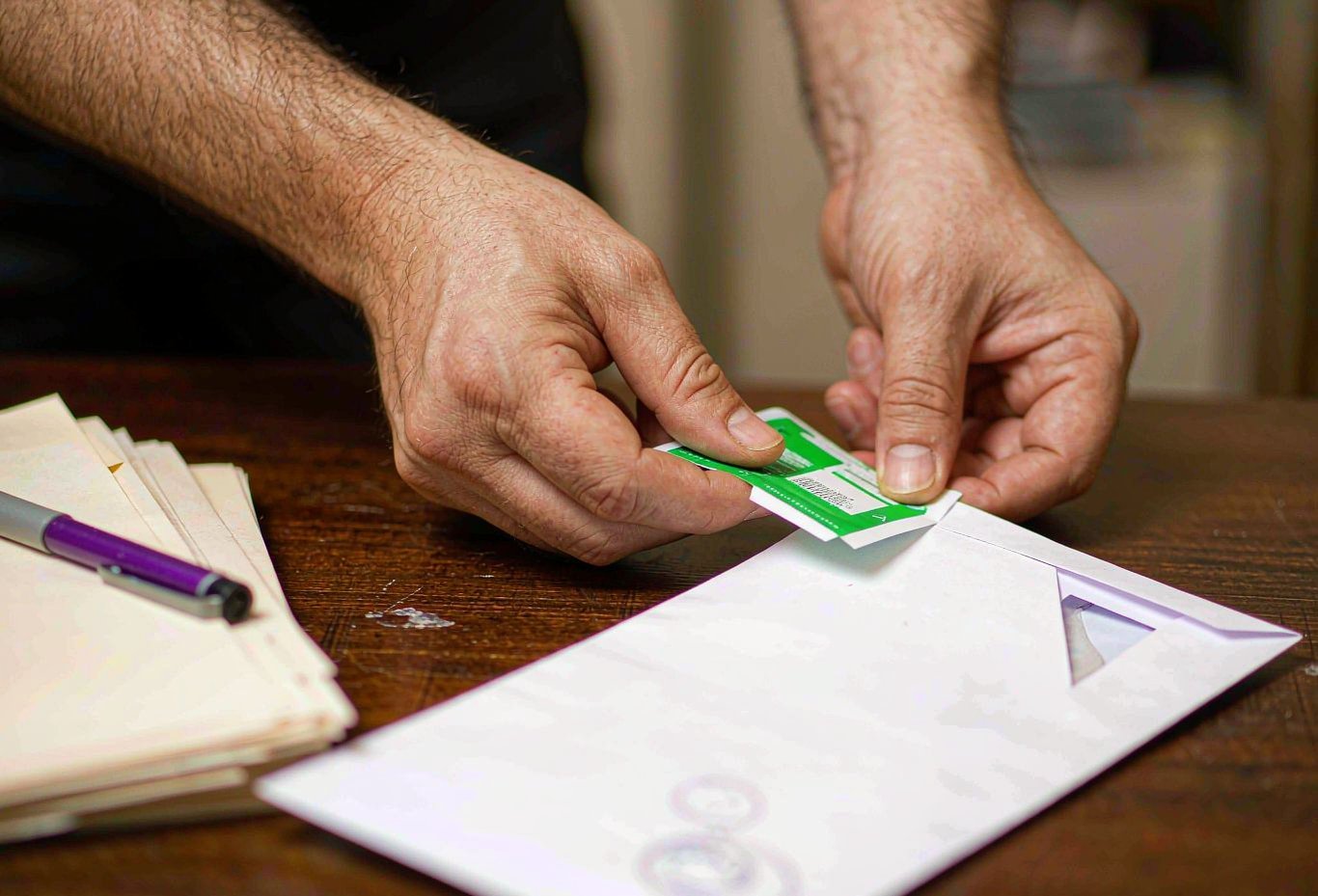
Add the electronic Return Receipt if you need the recipient’s signature on record. It’s a PDF of the signature, costs $2.91 instead of $4.65 for the paper card, and can’t get lost in the recipient’s mail pile.
When Registered Mail earns its fee
- Cash, jewelry, or anything with real resale value
- Irreplaceable originals: deeds, certificates, historical documents
- Anything you’d file an insurance claim over if it vanished
For everything else, ask a blunt question: could you print another copy? If yes, you don’t need a vault. You need proof, and proof costs $5.55.
Three ways people waste money here
Using Certified Mail on a parcel. It’s built for documents moving via First-Class or Priority Mail. For merchandise, Ground Advantage with Signature Confirmation gets you tracking and a signature without the ceremony.
Expecting speed. Certified Mail travels at ordinary First-Class pace, one to five days, and the signature requirement can slow it further if the recipient isn’t home. When the deadline matters more than the proof, Priority Mail Express is the upgrade — not Certified.
Paying Registered prices for Certified problems. The chain-of-custody premium only makes sense when the contents themselves are valuable or irreplaceable. Nobody needs $21.72 worth of security for a lease notice.
If certified letters are a monthly line item
Offices that send notices, invoices, or compliance mail in volume feel this in the budget: fifty certified letters a month runs about $318 before return receipts. Two things trim it. First, prepare labels online so acceptance and delivery records archive themselves instead of piling up as green cards. Second, buy the postage itself in bulk — a 1,000-stamp roll at $200 works out to 20¢ a stamp versus 82¢ at the counter, which quietly offsets a real chunk of the certified fee. Our bulk mailing checklist for small offices covers the rest of the routine.
And when it’s time to restock: wholesale Forever stamps start at $200 for 1,000 — genuine USPS stamps at 20¢ apiece, with free US shipping. See the wholesale deals →